UK Gambling Commission Releases Third Annual Report from Gambling Survey for Great Britain
David Lang · Aug 18, 2026

UK Gambling Commission Releases Third Annual Report from Gambling Survey for Great Britain
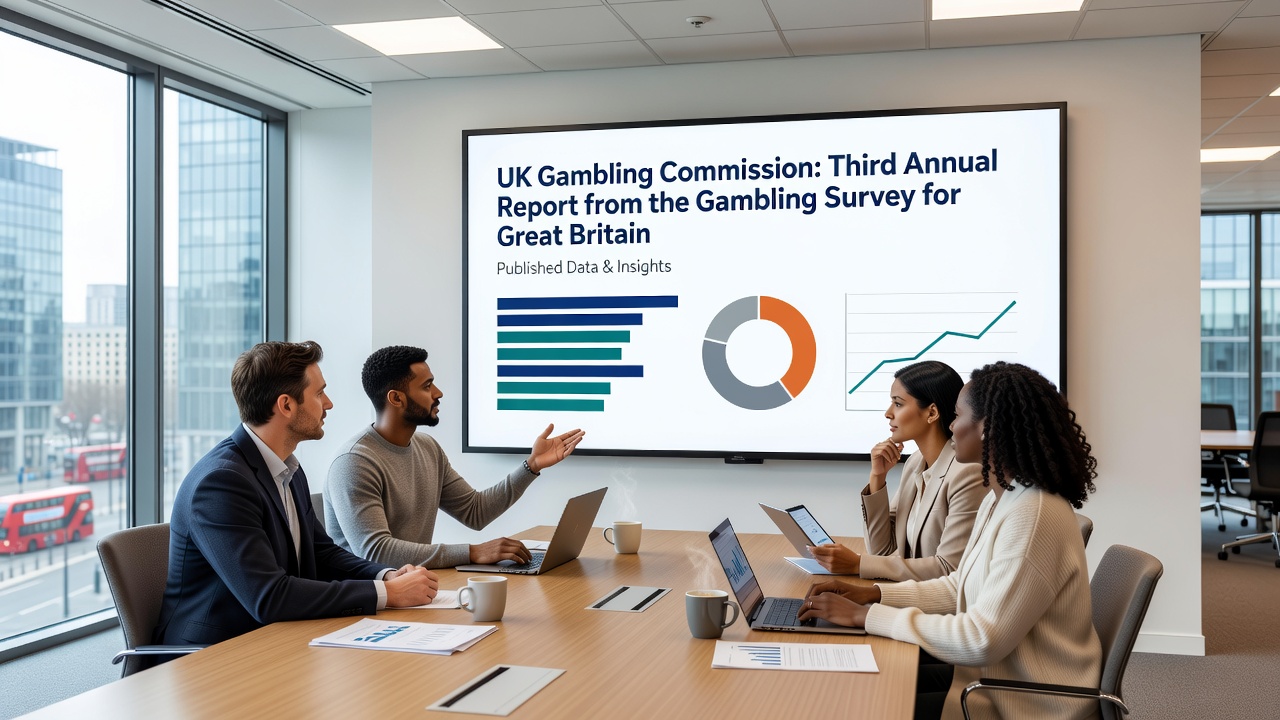
The UK Gambling Commission has published its third annual report drawn from the Gambling Survey for Great Britain, and this edition compiles official statistics gathered throughout 2025 as the survey enters its third year of continuous data collection across the country.
Researchers designed the project to track gambling participation rates alongside behaviours, attitudes, reasons for taking part, and any reported consequences or harms among adults living in Great Britain, which now supplies three complete years of comparable trend information that regulators and analysts can examine side by side.
Participation Rates Across the Population
Data collected during 2025 shows steady patterns in how adults engage with gambling activities, and the figures allow direct comparison with results from 2023 adn 2024 to reveal whether participation has risen, fallen, or remained stable over the full period. Observers note that the survey captures responses from a representative sample, which strengthens the reliability of national estimates and supports year-on-year analysis without major methodological shifts.
Those who have reviewed the latest release point out that the three-year span now provides enough baseline material for identifying longer-term movements in overall involvement, and this consistency matters because earlier surveys sometimes used different questions or sampling frames that complicated direct comparisons.
Behaviours and Frequency Patterns
The report examines specific behaviours such as how often people gamble, which products they choose, and whether they combine multiple forms of betting or gaming within the same period. Analysts at the Commission compiled responses that break down frequency into categories ranging from occasional participation to more regular engagement, and these breakdowns appear alongside demographic splits that highlight differences by age group and region.
Because the same questions were fielded each year, researchers can trace whether certain behaviours have become more or less common, and the 2025 dataset adds the most recent layer to that timeline. Figures reveal that the survey also records details about online versus land-based activity, which helps separate trends driven by digital platforms from those tied to physical venues.
Attitudes Toward Gambling
Attitudes form another core section of the report, and respondents answered questions about how they view gambling in general, whether they consider it harmless entertainment or something requiring caution, and how their opinions have shifted since earlier survey waves. The three-year perspective shows whether public sentiment has moved in any consistent direction or whether views have stayed largely unchanged despite changes in product availability and regulation.
People who study these attitude measures explain that the data capture both broad opinions and more specific judgments, such as perceptions of fairness in online games or concerns about advertising, which together build a fuller picture than any single year could provide on its own.
Reasons for Gambling
The survey asks participants to identify their main reasons for gambling, and the 2025 responses sit alongside answers collected in the two previous years so that shifts in motivation become visible. Common categories include social reasons, excitement, potential winnings, and relaxation, and the report presents these motivations broken down by frequency of play and by demographic characteristics.
Because the same wording has been used across all three years, direct comparisons become straightforward, and analysts can see whether certain motivations have grown or declined in prominence within the adult population.
Consequences and Reported Harms
A dedicated portion of the report addresses consequences and harms, and participants answered questions about any negative effects they associate with their own gambling or that of others close to them. The data cover financial impacts, emotional strain, relationship difficulties, and time spent on gambling activities, with responses again placed in context against the earlier survey rounds.
The three-year trend series now allows the Commission and external researchers to examine whether reported harm levels have followed any clear trajectory, and the consistent methodology supports more confident statements about stability or change than shorter data runs would permit. Gambling Survey for Great Britain (Annual Report 2025): Official statistics contain the full set of tables and technical notes that detail these measures.
Establishing Trend Data Over Three Years
One of the report’s main contributions lies in the creation of a stable trend series that stretches across 2023, 2024, and 2025, and this continuity helps separate short-term fluctuations from more persistent patterns. Statisticians at the Commission have documented the sampling approach and weighting procedures so that users can assess the strength of any observed changes, and the publication includes confidence intervals around key estimates.
Those who work with the dataset note that having three aligned years reduces the risk of over-interpreting single-year movements, and the latest release therefore serves as a reference point for future comparisons as additional waves are added.
Conclusion
The third annual report from the Gambling Survey for Great Britain supplies a consolidated view of participation, behaviours, attitudes, reasons, and harms based on 2025 data, and the three-year trend series now available offers a clearer foundation for monitoring developments across Great Britain. Regulators, researchers, and policy groups can draw on these official statistics to track how adult gambling patterns evolve, while the consistent methodology supports ongoing analysis in the years ahead.