How Regulatory Shifts Influence Payout Schedules on Live Poker and Crypto Platforms
Lars Fischer · Aug 23, 2026

How Regulatory Shifts Influence Payout Schedules on Live Poker and Crypto Platforms
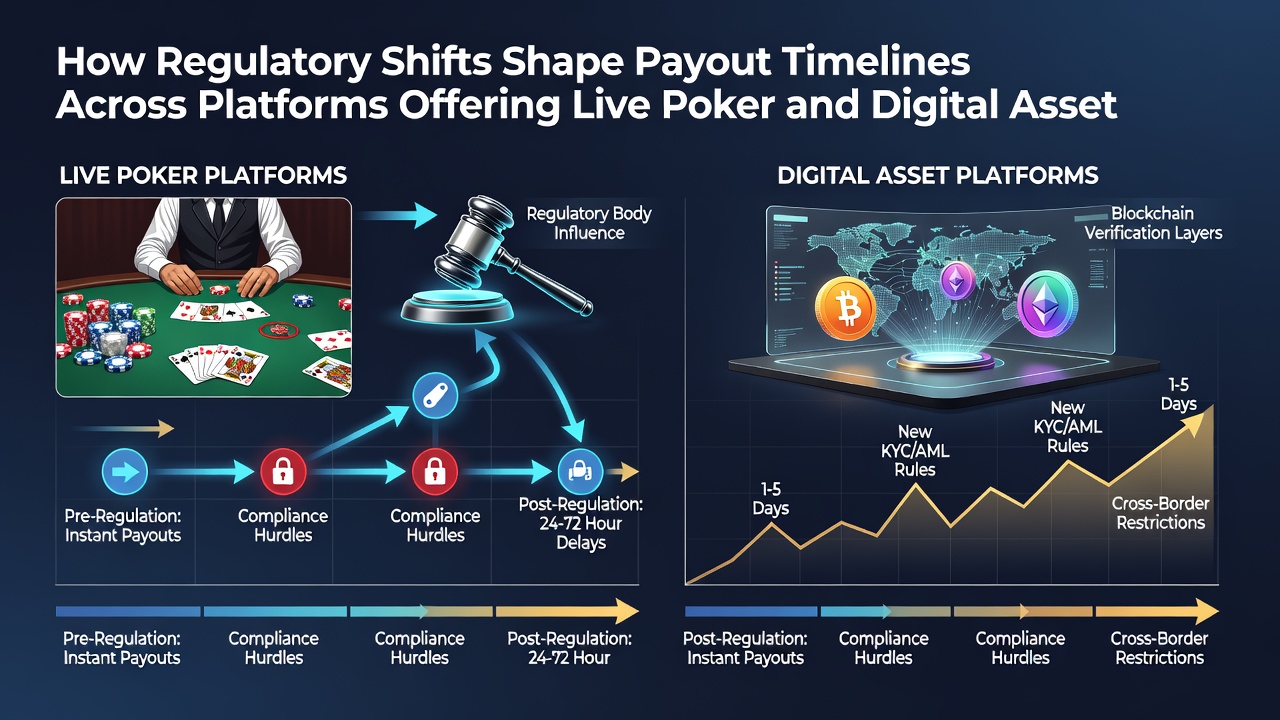
Regulatory frameworks governing live poker operations and digital asset movements continue to evolve, and those changes directly affect how quickly platforms process withdrawals. Observers note that compliance requirements around identity verification, anti-money laundering checks, and asset tracking often extend the time between a player request and final transfer. Data from multiple jurisdictions shows these timelines stretching from hours into several business days when new rules demand additional documentation or third-party reviews.
Platforms that combine live poker tables with cryptocurrency options face layered obligations because both gambling oversight and financial services regulations apply simultaneously. In practice this means operators must align with rules that cover both the gaming transaction and the underlying digital asset movement. Researchers tracking industry patterns report that companies operating across borders encounter the most friction when rules differ sharply between regions.
Verification Requirements and Processing Delays
Enhanced know-your-customer protocols introduced in recent years require platforms to collect and cross-check more personal details before releasing funds. Those who've studied transaction logs across several sites find that accounts flagged for manual review experience average delays of two to four additional days. Automated systems handle straightforward cases rapidly, yet any mismatch between provided information and external records triggers further scrutiny that cannot be bypassed without regulatory approval.
Impact of Digital Asset Rules on Transfer Speeds
Rules surrounding cryptocurrency transfers have tightened in multiple markets, with authorities demanding clearer records of asset origins and destination wallets. One study from a Canadian research group revealed that platforms incorporating Bitcoin or stablecoin payouts adjusted their internal workflows to accommodate new reporting standards, resulting in batch processing windows that occur only during specific weekday hours. This shift means users requesting transfers on Friday evenings sometimes wait until the following Monday or Tuesday for completion, even when the underlying blockchain network confirms the transaction almost instantly.
August 2026 marks the scheduled rollout of updated digital asset tracking requirements in several jurisdictions, and operators have already begun testing systems that integrate these forthcoming obligations. Early preparations include partnerships with licensed custodians and the adoption of standardized wallet screening tools that flag high-risk addresses before any transfer proceeds. Those monitoring pilot programs note that initial tests show modest increases in processing time during the first months after implementation, followed by gradual improvements once automated checks become routine.
Regional Variations in Timeline Expectations
European markets under the Markets in Crypto-Assets framework have established clear timelines for licensed entities, and data indicates most compliant platforms now complete verified withdrawals within forty-eight hours when no additional flags appear. Australian operators, guided by separate financial conduct rules, show slightly longer averages according to industry reports, largely because cross-border verification steps add layers that domestic-only transactions avoid. North American platforms present a more fragmented picture, with state-level gambling rules and federal financial guidelines sometimes overlapping in ways that extend review periods beyond those seen elsewhere.
Live poker environments introduce an extra variable because winnings often accumulate across multiple sessions and tables, creating larger aggregate sums that automatically trigger enhanced due diligence. Observers tracking platform policies find that amounts exceeding certain thresholds receive priority placement in review queues, yet the volume of such requests during peak tournament seasons can still create temporary backlogs lasting three to five days.
Industry Adaptations and Technology Integration
Operators have responded by investing in real-time compliance software that cross-references user data against multiple databases before a payout request even reaches human reviewers. These tools reduce the number of cases requiring manual intervention, and figures from several major platforms show measurable reductions in average processing windows after implementation. Blockchain analytics providers now supply services that allow sites to verify asset provenance quickly, and those who've adopted such solutions report smoother handling of digital asset transfers compared with earlier manual methods.
One example involves a multi-jurisdiction operator that integrated automated screening ahead of the 2026 regulatory milestones, resulting in a documented drop in flagged transactions from eighteen percent to under seven percent within six months. Similar patterns appear in reports shared at industry gatherings, where participants describe parallel experiences after updating their compliance stacks.
Conclusion
Regulatory developments continue to reshape payout expectations across platforms that offer both live poker and digital asset options. Verification standards, regional differences, and upcoming changes scheduled for August 2026 collectively determine how long users wait for funds to arrive. Organizations that align their systems with these requirements ahead of deadlines maintain smoother operations, while those adapting reactively encounter longer adjustment periods. The interplay between gaming rules and financial asset regulations remains a central factor shaping daily transaction flows in this sector.